
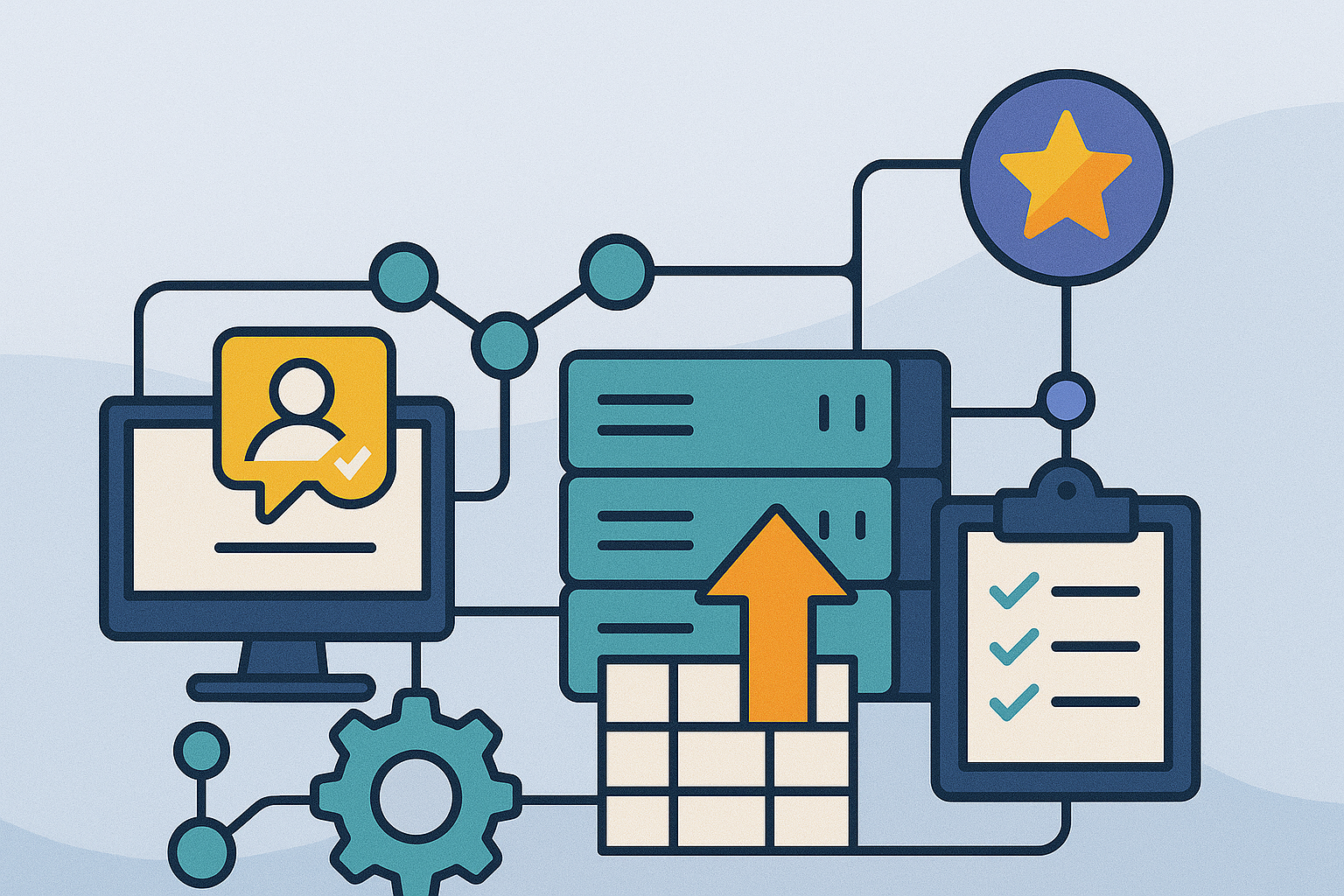

Behind every high-performing Customer Success organization lies a well-structured operational backbone one that quietly orchestrates data, tools, and processes to deliver value at scale. This is the world of Customer Success Operations (CS Ops) the unsung hero that enables CSMs to focus on customers instead of spreadsheets.
In the era of digital transformation, scaling Customer Success without a strong operational foundation is like trying to fly without wings. CS Ops turns fragmented workflows into cohesive systems, transforming strategy into execution and chaos into clarity.
Let’s uncover the hidden infrastructure that powers scalable, predictable, and data-driven Customer Success.
1. What Is CS Ops and Why It Matters
Customer Success Operations (CS Ops) is the engine room of a Customer Succes organization.
It provides the systems, processes, and analytics that empower CSMs to make smarter, faster, and more consistent decisions.
In simpler terms, CS Ops ensures that:
- The right customers get the right attention at the right time.
- Data flows seamlessly between Customer Success, Sales, and Product teams.
- Insights are actionable not buried in spreadsheets.
Without CS Ops, scaling Customer Success becomes nearly impossible because each team member operates in isolation, with limited visibility and inconsistent results.
2. The Core Pillars of CS Ops
To understand how CS Ops powers success, we must look at its four key pillars:
a. Systems and Tools
These are the platforms that automate, centralize, and visualize customer data.
From CRM systems like Salesforce and Hub Spot to Customer Success platforms like Gain sight, Churn Zero, or Catalyst the right tech stack allows teams to track health scores, renewals, and engagement with minimal manual work.
b. Process Design
CS Ops defines standardized workflows that ensure consistency in onboarding, adoption, escalation, and renewal.
A clear playbook means that every customer gets the same quality of experience, no matter who manages the account.
c. Data and Analytics
Data is the lifeblood of Customer Success.
CS Ops teams collect, clean, and interpret this data turning it into insights that guide strategy. Predictive analytics, customer segmentation, and health score modeling all stem from strong data governance.
d. Enablement and Training
Even the best systems fail without proper enablement. CS Ops ensures that CSMs are trained to use tools effectively and understand how to translate insights into action.
3. How CS Ops Enables Scalability
Scaling Customer Success isn’t about hiring more CSMs it’s about increasing efficiency per CSM.
CS Ops enables scalability through:
- Automation: Reducing manual touch points through triggered communications.
- Playbooks: Ensuring repeatable, proven approaches for common customer scenarios.
- Segmentation: Focusing effort where it matters most high-value or at-risk accounts.
- Visibility: Giving leadership clear insight into the health of the customer base.
For example, a mid-sized SaaS company might serve 500+ accounts with just 5 CSMs by leveraging automated check-ins, in-app messaging, and predictive churn alerts all designed and maintained by CS Ops.
4. The Bridge Between Teams: CS Ops as a Strategic Connector
CS Ops sits at the intersection of Customer Success, Sales, Product, and Marketing.
Its job is to ensure seamless collaboration across the customer lifecycle:
- With Sales: Smooth handoffs and clear expectations for new customers.
- With Product: Feedback loops that guide product roadmap decisions.
- With Marketing: Sharing success stories and customer insights for advocacy.
This cross-functional alignment makes CS Ops a strategic connector, ensuring every department works toward the same goal customer growth and retention.
5. Data Intelligence: The Future of CS Ops
The next evolution of CS Ops lies in predictive intelligence.
Machine learning and AI are transforming how companies understand and manage their customers:
- Predicting churn with early-warning models.
- Suggesting next-best actions for CSMs.
- Automating personalized engagement at scale.
By combining human empathy with AI-driven insight, CS Ops is redefining how businesses build proactive, intelligent customer success programs.
6. Measuring the Impact of CS Ops
The success of a CS Ops function isn’t measured by busy dashboards it’s measured by business outcomes:
- Increased Net Revenue Retention (NRR).
- Reduced Time to Value (TTV).
- Improved Customer Health Scores.
- Higher CSM Efficiency Ratios (more accounts managed per rep).
These metrics prove that CS Ops isn’t just a support function it’s a growth engine.
7. Building a CS Ops Function from Scratch
If your company is just starting, here’s a step-by-step roadmap:
- Define clear objectives what does “success at scale” mean for your team?
- Audit your tools Identify overlaps and gaps in your current tech stack.
- Establish data hygiene Clean, reliable data is essential.
- Build cross-team alignment Create shared goals and accountability.
- Start small, iterate fast Pilot processes before full rollout.
A lean, focused CS Ops team can deliver big results by prioritizing automation and insight over complexity.
Conclusion: The Power Behind the Curtain
Customer Success may be the face of the customer relationship, but CS Ops is the heartbeat that keeps it alive.
It provides the structure, insight, and scalability that transform good intentions into measurable outcomes.
As SaaS companies continue to scale, CS Ops will no longer be optional it will be mission-critical.
Because behind every successful Customer Success team, there’s a powerful, invisible force making it all possible: Customer Success Operations.
